Table of Contents
- Introduction to Trading Psychology
- The Role of Emotions in Trading
- Discipline and Consistency in Trading
- Remaining Focused and Avoiding Distractions
- Mental Toughness Building Strategies
- Common Psychological Pitfalls to Avoid
- Case Studies: How Successful Traders Master Trading Psychology
- Conclusion: The Journey of Mastering Trading Psychology
Trading psychology is a critical aspect of Forex trading that is often overlooked by many traders. While having a solid strategy and technical skills are essential, the ability to manage your emotions, maintain discipline, and stay focused under pressure is what truly separates successful traders from the rest. In this article, we’ll explore key trading psychology tips that can help you master your mind, enhance your trading performance, and achieve long-term success in the Forex market.
1. Introduction to Trading Psychology
Trading psychology is the mental and emotional state that dictates the decision-making process of a trader. In foreign exchange, where unpredictability and volatility is very often experienced, psychological attitude with which a trader faces the market can be the factor that defines success. Mastering trading psychology means understanding how such emotions as fear, greed, and overconfidence could influence you and your trading, and devising strategies to control and manage these emotions.
This is while one would usually concentrate on the trades from a technical standpoint, in terms of chart patterns and indicators. The importance of recognizing that psychology plays a role in trading cannot be overstated. Traders who can maintain a calm, disciplined mindset have a much better chance of making rational decisions, sticking with trading plans, and avoiding common pitfalls.
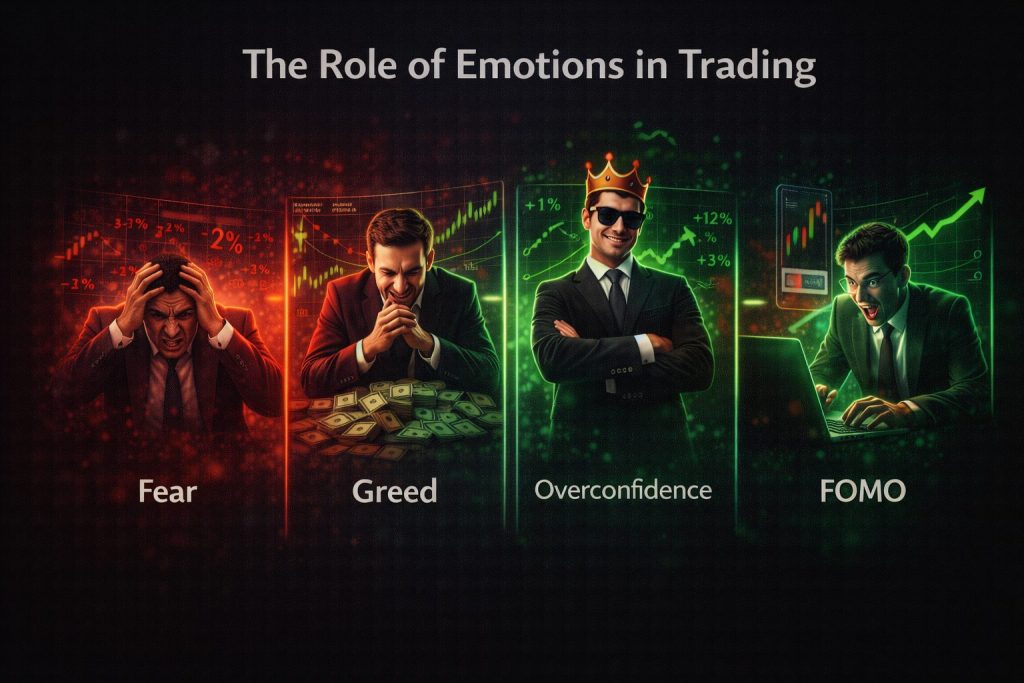
2. The Role of Emotions in Trading
Trading in securities is intensely emotional work, and with emotions come impulse-based decisions that could go wrong and ultimately result in a loss. Therefore, understanding how to manage these emotions is key to staying in control of your trading activities.
Managing Fear and Greed
Fear: This is one of the emotions that really come into play in the trading business. It might be fear of losing money, fear of missing a trade, or just a plain fear of making an error. This emotion can cause hesitation, missed opportunities, or exiting too early.
Hack: Start feeling your fears and do something to overcome them by focusing on the process and not the outcome. Use additional help for risk management, such as stop-loss orders, to reduce your potential losses and inoculate yourself against feelings of anxiety.
Greed: That can be equally harmful as it leads trades to unnecessary risks just to seek more significant profits. The result is often overtrading, holding positions for too long, and not following the risk management rules.
Tip: Set up specific profit goals beforehand and act based on that. Recognize the domination of greed to cause a judgment and understand that success is the only route through disciplined trading.
Coping with Overconfidence
It is overconfidence following a string of successful trades that probably make a trader feel he has just learned how to beat the market. Feeling that way, he may start taking bigger than normal positions or accept trades outside his trading rules, only to incur huge losses.
Tip: Stay humble and stay grounded no matter how hot you are. Continuously go over your trading plan and stick to it, even when you feel unbeatable.
How to Overcome the FOMO (Fear of Missing Out)
The fear of missing out is a very common emotion that can result in traders looking to get into trades rather impulsively, without proper analysis and planning. The FOMO condition is many times driven by participants’ success or rapidly moving markets.
Remember that the market will yield you with numerous opportunities. It is always better to miss a good trade than to take a trade without a plan. Always be focused on your long-term strategy rather than being swayed by short-term gains.
3. Discipline and Consistency in Trading
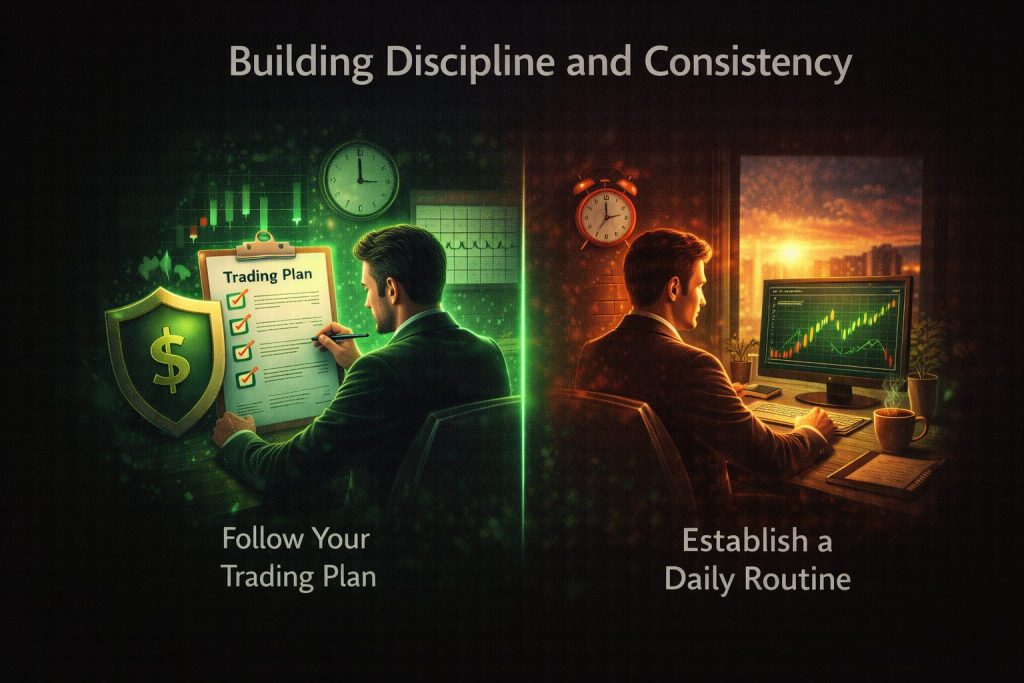
Establish and Commit to a Trading Plan
A well-defined trading plan can outline a given strategy of entry and exit points, rules of risk management, and selection criteria. It’s important to stick to your trading plan to be disciplined and not commit impulsive decisions.
Tip: Write your trading plan on a page to keep it within sight during your trades. Read it from time to time to make sure you comply with your rules and that decisions are based on logic rather than emotions.
The Significance of Routine in Trading
A trading routine is the backbone of consistency in your approach to the market every day. Just some of the elements you include in your daily routine are market analysis, journaling, and review of past trades.
Tip: Establish your morning routine, which includes reviewing your trading plan, contextual analysis of the markets, and setting intentions for the trading day.
Managing Losing Streaks with Resilience
Trading, at times, involves losing streaks, but how you handle them makes the difference between long-term failure or success. More important is not to lose your resilience by changing decisions emotionally because of losses.
Tip: Take a break from trading after a losing streak. Review trades for errors, but focus on the bigger picture and long-term process.
4. Remaining Focused and Not Being Distracted
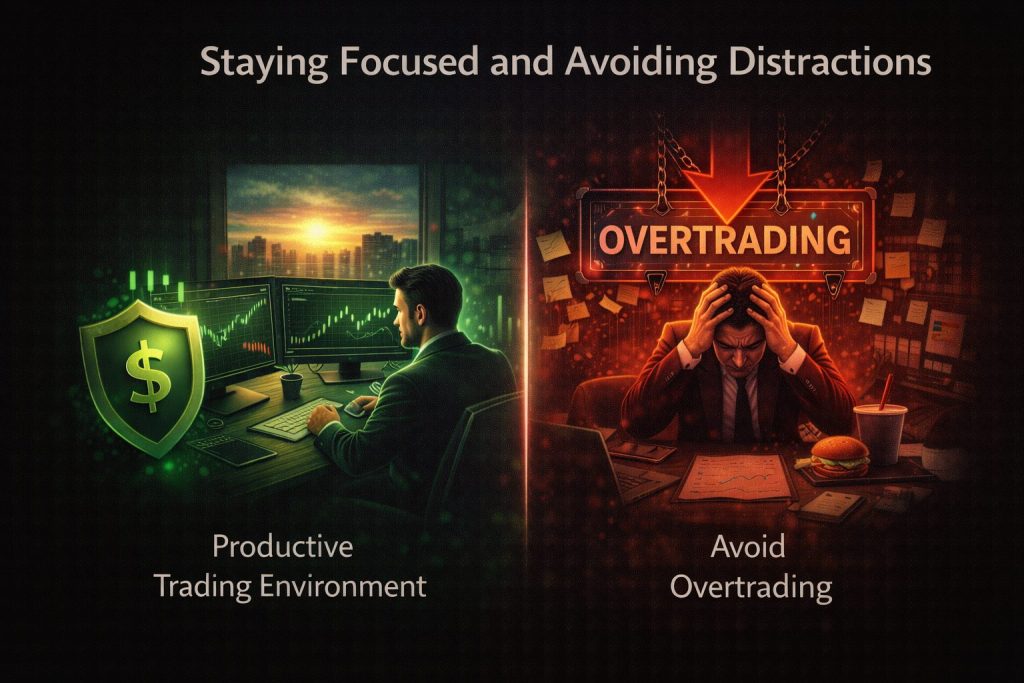
Creating a Productive Trading Environment
The environment one is trading in can impact focus significantly. A cluttered and noisy space reduces concentration, while a calm and organized environment supports clear decision-making.
Tip: Allocate a region for trading without disturbances. Keep this region clean, organized, and quiet to maintain focus during trading sessions.
Stress Management and Burnout Prevention
Trading can be stressful, especially during volatile markets or losing streaks. Chronic stress can lead to burnout, negatively impacting trading performance and overall well-being.
Note: Incorporate stress management methods such as scheduled breaks, exercise, and meditation. Trade limited hours to prevent burnout.
Performance Effects of Overtrading
Overtrading occurs when traders take excessive trades, often driven by the desire to recover losses or capture every market move. This behavior increases stress and leads to poor decisions.
Hint: Limit the number of trades per day or week. Focus on quality over quantity and ensure every trade aligns with your trading plan.
5. Mental Toughness Building Strategies
Mindfulness and Meditation
Mindfulness is about being present and aware of thoughts and emotions without judgment. Meditation helps reduce stress, improve focus, and increase emotional control.
Tip: Start the day with short meditation to clear your mind and maintain awareness of thoughts and emotions during trading.
Visualization Techniques
Visualization involves mentally rehearsing successful trades and positive outcomes. This technique builds confidence and reinforces disciplined behavior.
Tip: Visualize executing trades perfectly according to your plan before entering the market.
Setting Realistic Goals and Expectations
Realistic goals help maintain motivation and reduce frustration. Unrealistic expectations often lead to stress, overtrading, and poor decisions.
Tip: Break long-term goals into achievable short-term objectives and focus on process-based goals rather than profit targets alone.
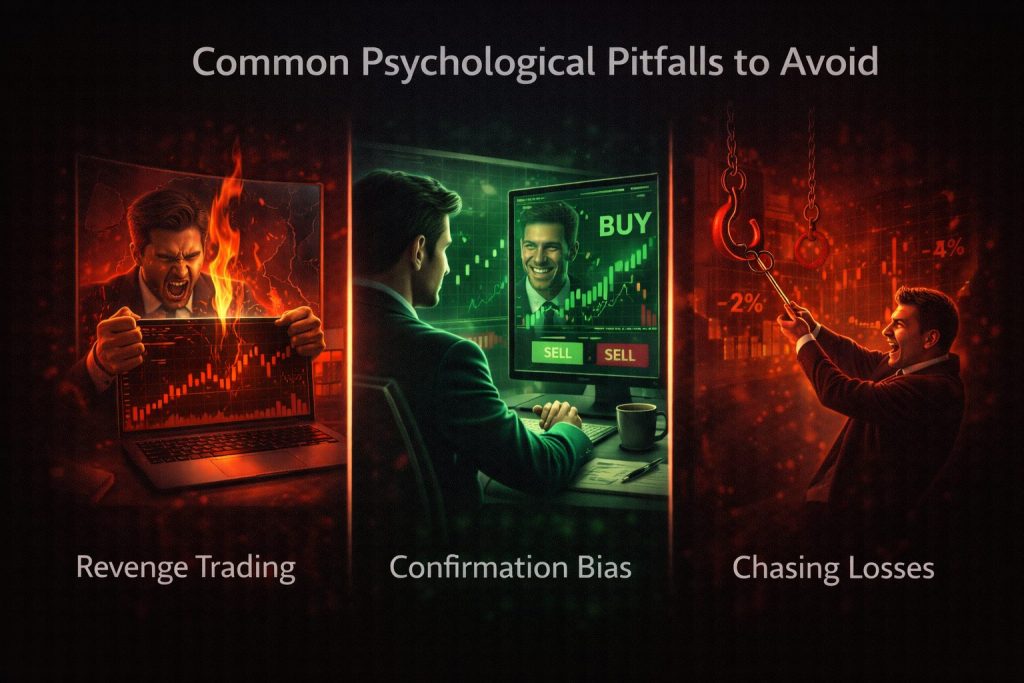
6. Common Psychological Pitfalls to Avoid
Emotional and Revenge Trading
Revenge trading occurs when traders attempt to recover losses through impulsive, high-risk trades driven by frustration or anger.
Avoidance Tip: Step away from the market after a loss and only return once emotional balance is restored.
Confirmation Bias
Confirmation bias is the tendency to seek information that supports existing beliefs while ignoring contradictory evidence, leading to poor decisions.
Tip: Regularly challenge your assumptions and seek opposing viewpoints.
Chasing Losses
Chasing losses involves increasing trade size or frequency to recover losses, often resulting in deeper drawdowns.
Avoidance Tip: Stick to risk management rules and accept losses as a normal part of trading.
7. Case Studies: How Successful Traders Master Trading Psychology
Case Study 1: Overcoming FOMO
A trader struggled with impulsive trades due to FOMO, resulting in inconsistent performance. By practicing mindfulness and focusing on long-term goals, the trader gained control over impulses and improved results.
Case Study 2: The Power of Routine
Another trader achieved steady growth by implementing a disciplined pre-trading routine that improved focus, reduced stress, and reinforced consistency.
8. Conclusion: The Journey of Mastering Trading Psychology
Trading psychology is mastered over time through self-awareness, discipline, and consistent effort. By understanding emotional influences, building discipline, maintaining focus, and strengthening mental resilience, traders improve their chances of long-term success. Trading psychology is as important as technical and fundamental analysis and is essential for navigating the Forex market successfully.
Frequently Asked Questions (FAQs)
What is trading psychology in Forex?
Trading psychology refers to the emotional and mental state that influences a trader’s decisions, including how they manage fear, greed, discipline, and stress while trading Forex.
Why is trading psychology important in Forex trading?
Trading psychology is important because emotional mistakes such as fear, greed, and overconfidence can lead to poor decisions, even when a trader has a solid strategy.
How can emotions negatively affect Forex trading?
Emotions can cause traders to overtrade, exit positions too early, hold losing trades too long, or abandon their trading plan altogether.
What is FOMO in trading?
FOMO, or Fear of Missing Out, occurs when traders enter trades impulsively due to fast market movements or others’ success, often without proper analysis.
How can traders control fear and greed?
Traders can control fear and greed by following a structured trading plan, using risk management tools like stop-loss orders, and focusing on the trading process rather than outcomes.
What role does discipline play in trading psychology?
Discipline ensures that traders follow their trading plan consistently, avoid impulsive decisions, and maintain a structured approach regardless of market conditions.
How does overtrading affect trading performance?
Overtrading increases stress, reduces focus, and often leads to poor decision-making, which can result in larger losses and emotional burnout.
Can mindfulness improve trading performance?
Yes, mindfulness helps traders stay present, manage stress, and become more aware of emotional triggers, leading to clearer and more rational trading decisions.
What is revenge trading?
Revenge trading happens when a trader tries to recover losses by taking impulsive, high-risk trades, usually driven by frustration or anger.
How long does it take to master trading psychology?
Mastering trading psychology is an ongoing process that develops over time through experience, self-awareness, discipline, and consistent practice.
