
Timing is everything in Forex trading. The ability to enter and exit trades at the right moments can significantly impact your profitability and overall trading success. In the constantly moving Forex market, where prices can fluctuate within seconds, mastering the art of timing can make the difference between a successful trade and a missed opportunity. This article will explore the importance of timing in Forex trading, the factors that influence optimal timing, and strategies for improving your timing skills to enhance your trading performance.

1. Introduction to Timing in Forex Trading
Timing in Forex trading refers to the process of deciding when to enter and exit trades based on market conditions and analysis. Unlike other financial markets, the Forex market operates 24 hours a day, five days a week, due to its global nature. This continuous trading environment provides numerous opportunities, but it also requires traders to be mindful of the best times to trade.
Successful timing in Forex trading involves understanding when the market is likely to be most active, when significant price movements are expected, and how to use technical and fundamental analysis to make informed timing decisions. Mastering timing can lead to better trade execution, reduced risk, and higher profitability.
2. The Importance of Timing in Forex
Timing is a crucial aspect of Forex trading for several reasons:
Maximizing Profit Potential
Entering a trade at the right time can allow traders to capture the maximum profit from price movements. By timing trades to coincide with the start of a trend or a breakout, traders can ride the momentum and achieve better returns.
Example: Entering a long position on EUR/USD just as it breaks above a key resistance level can result in significant profits as the trend continues upward.
Minimizing Losses
Proper timing can also help minimize losses by allowing traders to exit positions before adverse price movements occur. Knowing when to cut losses and exit a trade is as important as knowing when to enter.
Example: If a trader recognizes a reversal pattern forming, they can exit their long position to avoid losses from the ensuing downtrend.
Avoiding Unnecessary Risks
Timing helps traders avoid unnecessary risks by keeping them out of the market during periods of low liquidity or high uncertainty. By staying on the sidelines during such times, traders can protect their capital and avoid being caught in sudden, unpredictable price swings.
Example: A trader might avoid trading during major news announcements that could lead to volatile and unpredictable market behavior.
3. Key Factors Affecting Timing in Forex Trading
Several factors influence the optimal timing for Forex trades. Understanding these factors can help traders make better decisions and improve their timing.
Market Sessions and Overlaps
The Forex market is divided into three major trading sessions: the Asian, European (London), and North American (New York) sessions. Each session has its own characteristics and levels of activity. The overlap between the London and New York sessions, for example, is known for high volatility and liquidity, making it an ideal time for trading.
Tip: Focus on trading during the London-New York overlap for the best liquidity and tighter spreads.
Economic News and Data Releases
Economic news and data releases, such as GDP reports, employment data, and interest rate decisions, can have a significant impact on currency prices. Timing trades around these events can provide opportunities to capitalize on sharp price movements.
Tip: Use an economic calendar to track upcoming news events and plan your trades accordingly.
Market Sentiment and Volatility
Market sentiment, driven by geopolitical events, economic outlooks, and investor confidence, plays a crucial role in determining market direction and timing. Volatility often increases during periods of uncertainty, leading to larger price swings.
Tip: Monitor market sentiment and volatility indicators to gauge the best times to enter or exit trades.
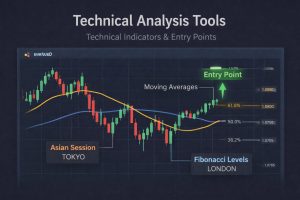
4. Technical Analysis Tools for Timing
Technical analysis provides traders with tools and indicators to help time their trades more effectively. Here are some key tools used in timing Forex trades:
Moving Averages
Moving averages are widely used to identify trends and potential entry and exit points. A moving average crossover, where a shorter-term moving average crosses above or below a longer-term moving average, can signal a change in trend direction.
Example: A trader might enter a long position when the 50-day moving average crosses above the 200-day moving average, indicating a bullish trend.
Candlestick Patterns
Candlestick patterns, such as doji, engulfing patterns, and hammers, provide visual cues about market sentiment and potential reversals. Recognizing these patterns can help traders time their entries and exits.
Example: A bullish engulfing pattern after a downtrend might signal a reversal, prompting a trader to enter a long position.
Fibonacci Retracement Levels
Fibonacci retracement levels are used to identify potential support and resistance levels where the price might reverse. These levels can be used to time entries and exits during a retracement within a trend.
Example: A trader might wait for a retracement to the 61.8% Fibonacci level before entering a long position, anticipating the continuation of the uptrend.
Relative Strength Index (RSI)
The RSI is a momentum oscillator that measures the speed and change of price movements. It helps identify overbought or oversold conditions, signaling potential reversals.
Example: A trader might sell a currency pair when the RSI crosses above 70, indicating overbought conditions, and buy when it falls below 30, indicating oversold conditions.

5. Timing Strategies for Forex Traders
Different trading strategies rely on precise timing to achieve optimal results. Here are some popular timing-based strategies in Forex trading:
Trend Following and Timing
Trend following involves entering trades in the direction of the prevailing trend. Timing is crucial to enter at the beginning of the trend and avoid entering too late when the trend is about to reverse.
Example: A trader might use moving averages and trendlines to identify the start of a new trend in USD/JPY and enter a position early in the trend.
Breakout Trading and Timing
Breakout trading involves entering trades when the price breaks through a significant support or resistance level. Timing is key to entering as soon as the breakout occurs to capture the momentum.
Example: A trader might place a buy order just above a resistance level on GBP/USD, anticipating a breakout to the upside.
Scalping and Precision Timing
Scalping is a short-term trading strategy that involves making multiple small trades throughout the day to capture small price movements. Precision timing is essential to enter and exit trades quickly.
Example: A scalper might use 1-minute charts and momentum indicators to time trades on EUR/USD, entering and exiting positions within seconds or minutes.
News Trading Strategies
News trading involves taking advantage of sharp price movements following economic news releases. Timing is critical to enter trades before the market reacts or immediately after the news is released.
Example: A trader might go long on AUD/USD right before the release of positive employment data from Australia, expecting a surge in the currency’s value.

6. The Role of Patience and Discipline in Timing
Mastering the art of timing requires patience and discipline. Rushing into trades or acting on impulse can lead to poor timing and losses.
Waiting for the Right Setup
Successful traders wait for the right setup that aligns with their trading strategy. This patience helps avoid impulsive decisions and ensures trades are based on solid analysis.
Tip: Develop a set of criteria for entering trades and wait for those criteria to be met before acting.
Avoiding Overtrading
Overtrading can result from impatience or the desire to capitalize on every market movement. Overtrading increases the risk of mistimed trades and losses.
Tip: Stick to your trading plan and avoid taking trades just to be active in the market. Focus on quality over quantity.
Learning from Timing Mistakes
Even the most experienced traders make timing mistakes. The key is to learn from these mistakes, analyze what went wrong, and refine your timing skills.
Tip: Keep a trading journal to record your trades, including the timing of entries and exits. Review your journal regularly to identify patterns and improve your timing
7. Case Studies: Successful Timing in Forex Trading
Real-world examples can illustrate the importance of timing in Forex trading.
Case Study 1:
Timing a Trade During the London-New York Overlap
A trader identifies a potential uptrend in EUR/USD and decides to wait for the London-New York session overlap for increased liquidity. During the overlap, the pair breaks above a key resistance level, and the trader enters a long position. The increased volatility during the overlap amplifies the price movement, leading to a profitable trade.
Case Study 2:
Capitalizing on a Major Economic Release
A trader monitors the economic calendar and sees that the U.S. Non-Farm Payrolls (NFP) report is due. Anticipating strong job growth, the trader enters a long position on USD/JPY just before the release. When the report shows better-than-expected numbers, the dollar surges, and the trader profits from the timely entry.
8. Conclusion: Mastering Timing for Long-Term Success
Mastering the art of timing in Forex trading is crucial for achieving long-term success. By understanding the factors that influence timing, using technical analysis tools, and employing disciplined timing strategies, traders can improve their ability to enter and exit trades at optimal moments. Patience, discipline, and continuous learning are essential components of successful timing. By honing these skills, traders can enhance their trading performance, manage risk effectively, and capitalize on the opportunities presented by the dynamic Forex market.
