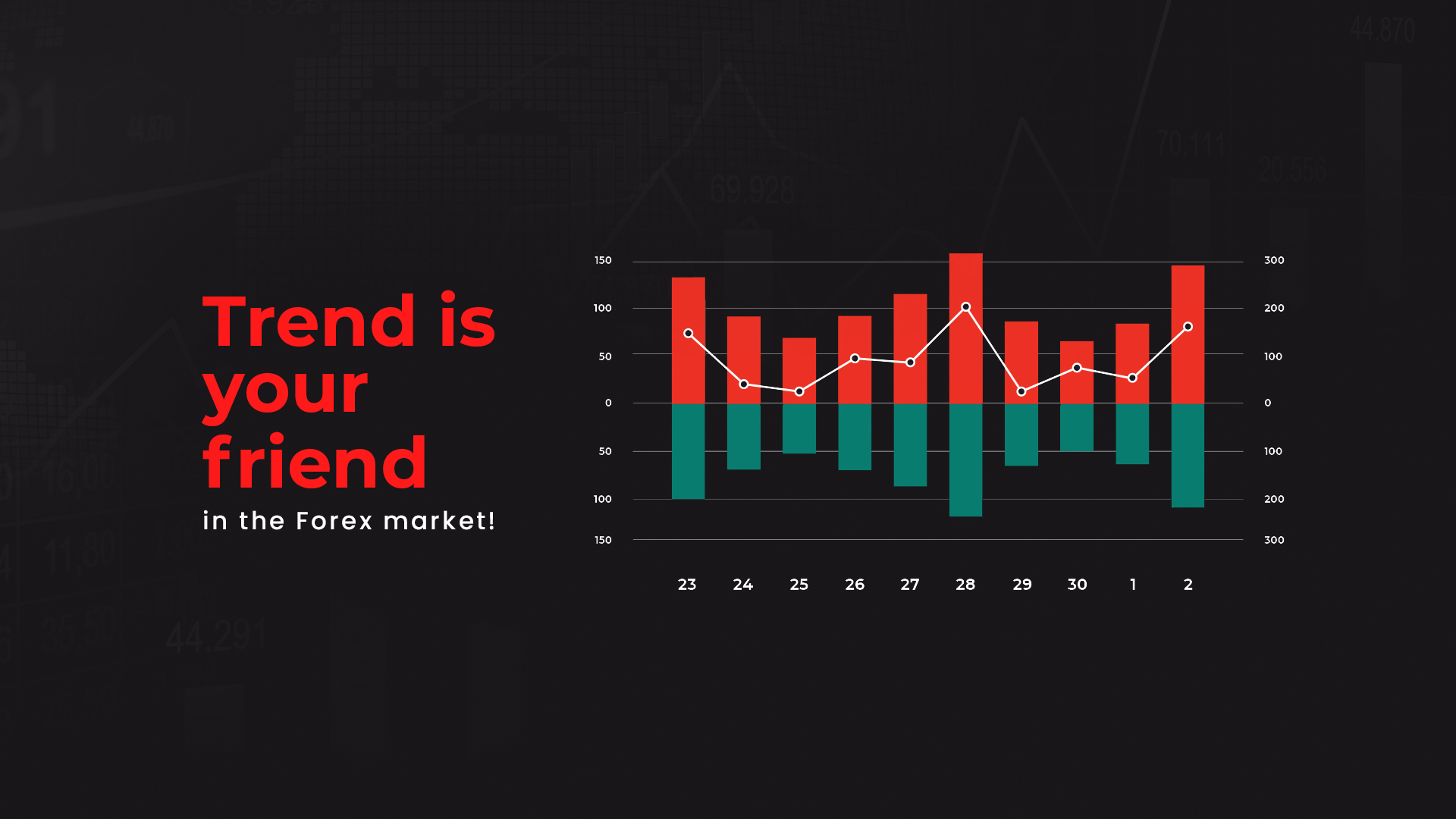
Financial markets are often compared to oceans, where waves of price movements constantly take place. These waves—also known as market trends—reflect collective market psychology. In financial markets such as Forex and stocks, trends are driven by factors including economic data, geopolitical events, and investor sentiment.
“The trend is your friend” is more than just a popular trading phrase—it is a core philosophy that emphasizes trading in the direction of the market rather than against it. This article explains how traders can harness the power of trends to make smarter trading decisions and increase their chances of long-term success.
Understanding Market Trends
What Is a Market Trend?
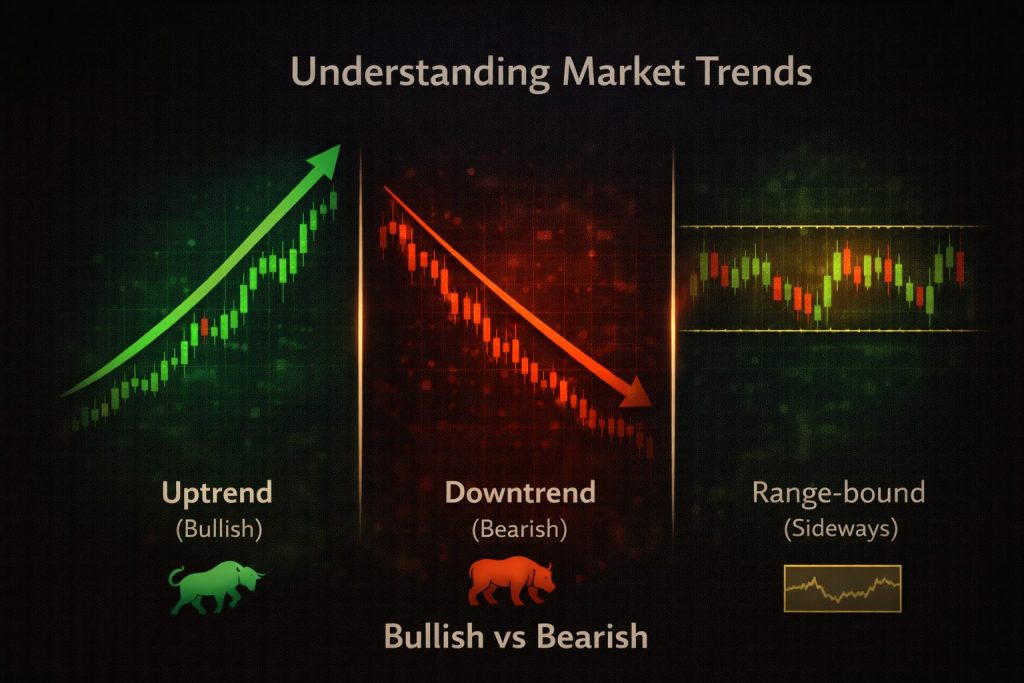
A market trend refers to the general direction in which an asset’s price moves over a specific period of time. Trends can be categorized into three main types:
-
Upward (Bullish) Trend
-
Downward (Bearish) Trend
-
Sideways (Ranging) Trend
A bullish trend is characterized by higher highs and higher lows, signaling a growing market.
A bearish trend consists of lower highs and lower lows, indicating market decline.
A ranging trend occurs when price moves sideways within a defined range, showing no clear upward or downward direction.
Types of Market Trends
Uptrend (Bullish Trend)
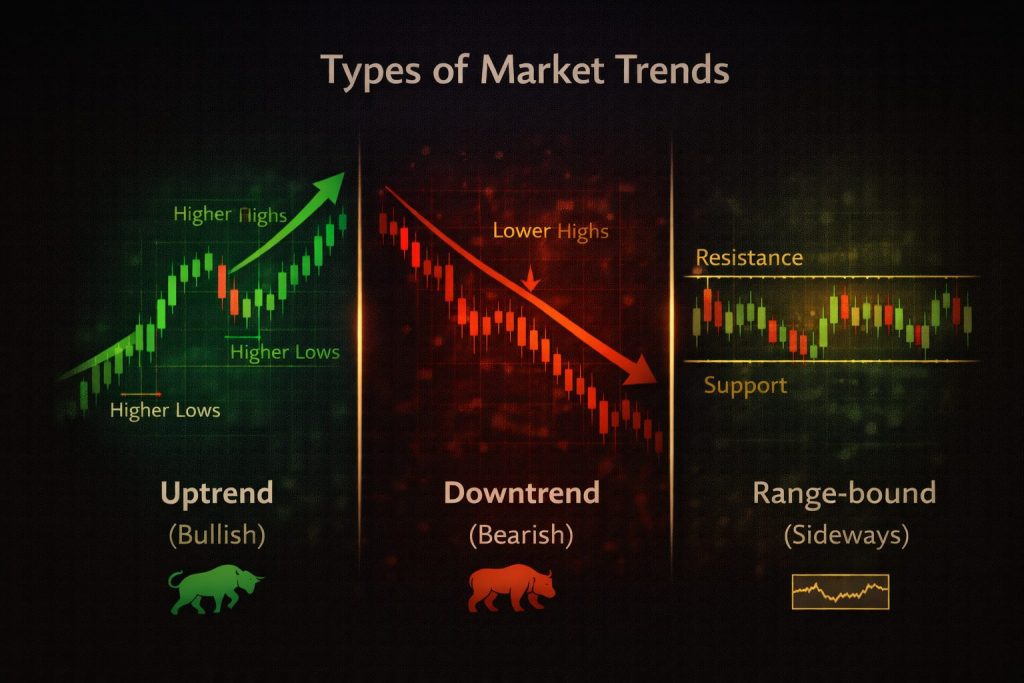
In an uptrend, prices consistently form higher highs and higher lows. Traders typically look for buy or long opportunities during bullish trends.
Downtrend (Bearish Trend)
A downtrend is defined by lower highs and lower lows. In this scenario, traders usually look to sell or go short.
Range-Bound (Sideways Trend)
Here, prices move horizontally between support and resistance levels. Traders often buy near support and sell near resistance.
The Importance of Following Trends
Trading with the trend significantly increases the probability of success. A trend represents the dominant market sentiment. Trading against it is like swimming against a strong current—it is possible but far more difficult and risky.
By aligning trades with the prevailing trend, traders can:
-
Improve win rates
-
Reduce emotional stress
-
Avoid unnecessary losses
Identifying Market Trends
Identifying a trend is the first step in building an effective trading strategy. Traders rely on various tools and indicators to determine whether a trend exists and how strong it is.

Technical Analysis Tools
Technical analysis focuses on historical price and volume data. Key tools include:
Trendlines
Trendlines are drawn by connecting a series of highs or lows to visually define the trend direction.
Moving Averages
Moving averages smooth price data to reveal trend direction. The 50-day and 200-day moving averages are among the most widely used in Forex and stock trading.
Support and Resistance Levels
These are key price levels where the market tends to reverse or consolidate, helping define trend boundaries.
Indicators Used to Identify Trends
Several technical indicators are specifically designed to identify trends:
-
MACD (Moving Average Convergence Divergence): Shows trend direction, momentum, and strength.
-
RSI (Relative Strength Index): Identifies overbought or oversold conditions that may signal trend reversals.
-
ADX (Average Directional Index): Measures trend strength. An ADX value above 25 typically indicates a strong trend.
Timeframes and Trends
Trends vary by timeframe:
-
Short-term traders may focus on hourly or daily trends
-
Long-term investors often analyze weekly or monthly trends
It is essential to align your trading strategy with the timeframe of the trend you are trading.

Trading with the Trend
Once a trend is identified, the next step is executing trades that align with it. Trend trading involves entering in the direction of the trend and exiting before a reversal occurs.
Trend-Following Strategies
Breakout Trading
Traders enter a trade when price breaks above resistance or below support, signaling trend continuation.
Pullback Trading
This strategy involves entering during a temporary retracement within the trend, allowing for better entry prices.
Moving Average Crossovers
Trades are entered when a short-term moving average crosses above or below a long-term moving average, indicating a potential trend shift.
Entry and Exit Points
Proper entry and exit points are critical for maximizing profits and minimizing risk.
Entry Guidelines
-
Enter after the trend is clearly confirmed
-
Common entries include breakouts or pullbacks
Exit Guidelines
-
Exit when signs of trend reversal appear
-
Use opposite moving average crossovers or broken support/resistance levels
Risk Management in Trend Trading
Risk management is essential to protect against unexpected market reversals.
Key techniques include:
-
Stop-Loss Orders: Limit losses by exiting at predefined levels
-
Position Sizing: Adjust trade size based on risk tolerance and trend strength
-
Trailing Stops: Lock in profits as the trend progresses
Common Trend Trading Mistakes
Even with a strong strategy, traders can make costly errors.
Overtrading and Trend Chasing
Overtrading often stems from greed and leads to unnecessary losses. Trend chasing—entering trades too late—results in poor entries and higher risk.
Ignoring Trend Reversals
Trends can reverse due to economic news or geopolitical events. Ignoring warning signs can erase profits quickly.
Emotional Trading
Fear and greed often cause traders to abandon their plans. Discipline, a clear strategy, and solid risk management are essential to avoid emotional decisions.
Case Studies of Successful Trend Traders
Many legendary traders built their success on trend-following strategies.
Richard Dennis, co-founder of the Turtle Trading system, believed anyone could learn to trade successfully. His strategy focused on breakout trading and letting profits run.
Paul Tudor Jones famously predicted the 1987 stock market crash and profited by following macroeconomic trends rather than short-term noise.
Conclusion
“The trend is your friend” remains a foundational principle in both Forex and stock trading. Trading in the direction of the prevailing trend offers higher probability setups and reduced risk compared to fighting market momentum.
Mastering trend trading requires patience, discipline, and a well-defined strategy. By applying the principles and techniques outlined in this article, traders—both beginners and professionals—can learn to truly make the trend their friend in the world of trading.
