Introduction: Why Fundamentals Move the Forex Market
Currencies do not move randomly. Behind every major rally, collapse, or long-term trend in the forex market lies a fundamental reason—whether it’s a surprise interest rate hike, an inflation shock, or a shift in central bank policy.
This is where fundamental analysis in forex trading becomes essential.
Unlike technical analysis, which focuses on price charts and indicators, fundamental analysis examines the economic forces that determine a currency’s true value. These forces include:
-
Economic data releases
-
Interest rate decisions
-
Central bank policy statements
-
Global risk sentiment
Understanding these drivers allows traders to anticipate why currencies move—not just when.
In this guide, you’ll learn how fundamental analysis works in forex, how to interpret economic news, and how central banks and interest rates shape currency markets globally.
What Is Fundamental Analysis in Forex?
Fundamental analysis in forex is the evaluation of a currency’s value based on economic, financial, and geopolitical factors.
Instead of asking:
“What does the chart say?”
Fundamental traders ask:
“What is happening in the economy that makes this currency stronger or weaker?”
Core Goal of Forex Fundamental Analysis
The primary objective is to determine whether a currency is:
-
Overvalued
-
Undervalued
-
Fairly priced
This assessment helps traders position themselves for medium- to long-term trends, as well as high-impact short-term moves around major news events.
What Fundamental Analysis Focuses On
Fundamental analysis in forex trading revolves around three pillars:
-
Economic News & Data
-
Interest Rates
-
Central Banks
Each of these components influences capital flows, investor confidence, and currency demand.
How the Forex Market Reacts to Economic Forces
Currencies represent economies. When an economy performs well, demand for its currency tends to rise. When economic conditions deteriorate, capital often flows out.
Key drivers include:
-
Economic growth
-
Inflation levels
-
Employment strength
-
Political stability
-
Monetary policy
Because forex markets are forward-looking, prices often move before data is released—based on expectations.
Economic News and Forex Trading Explained

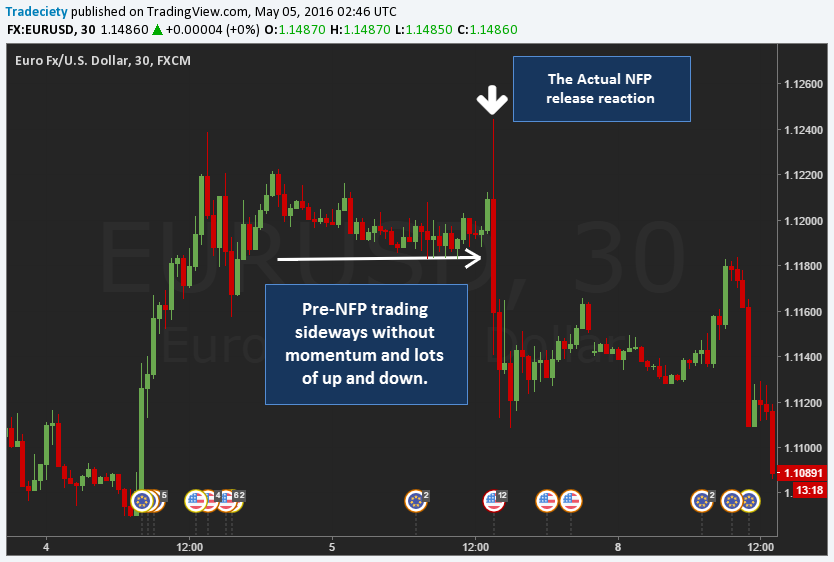
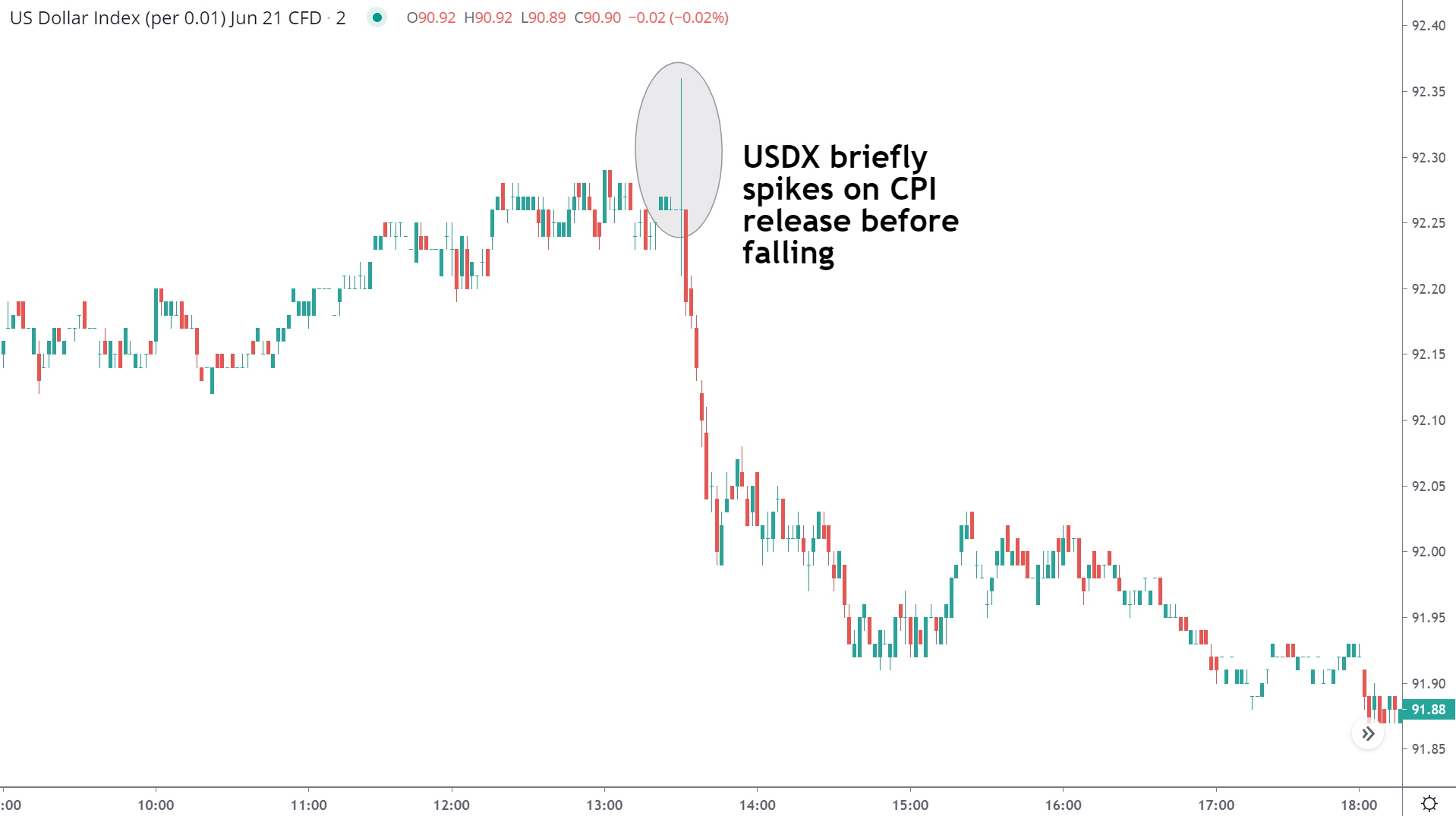
Economic news releases are among the most powerful catalysts in forex trading.
Why Economic News Matters in Forex
Economic data provides insight into:
-
The health of an economy
-
Future interest rate decisions
-
Central bank policy direction
When actual data differs from expectations, markets react—often violently.
High-Impact Economic Indicators for Forex
Some reports consistently move currency markets more than others.
1. Gross Domestic Product (GDP)
GDP measures overall economic output.
-
Strong GDP → Currency appreciation
-
Weak GDP → Currency depreciation
GDP trends influence long-term currency valuation.
2. Inflation Data (CPI & PPI)
Inflation directly impacts monetary policy.
-
Rising inflation → Potential rate hikes
-
Falling inflation → Potential rate cuts
Because of this, inflation reports are closely watched by traders and central banks alike.
3. Employment Data
Employment reflects economic strength and consumer demand.
Key reports include:
-
Non-Farm Payrolls (NFP)
-
Unemployment Rate
-
Wage Growth
Strong labor markets often support higher interest rates.
Understanding Market Expectations vs Actual Data
One of the most misunderstood aspects of fundamental analysis is expectations.
Forex markets do not react to data alone—they react to:
-
Data vs forecasts
-
Forward guidance
-
Revisions to prior data
Example:
-
Expected inflation: 3.0%
-
Actual inflation: 3.0%
→ Little to no reaction
But:
-
Expected inflation: 2.5%
-
Actual inflation: 3.2%
→ Sharp currency movement
Surprises move markets, not headlines.
Economic Calendars: A Fundamental Trader’s Tool
Every fundamental forex trader relies on an economic calendar.
Economic calendars show:
-
Release dates
-
Expected values
-
Previous data
-
Impact level (low, medium, high)
They help traders prepare for volatility rather than react emotionally.
How to Use an Economic Calendar Effectively
Best practices include:
-
Avoid entering trades before major releases
-
Trade post-news confirmation
-
Align news bias with broader trends
Track revisions and central bank reactions


Interest Rates and Forex: The Most Powerful Driver of Currency Prices
If there is one fundamental factor that dominates long-term currency movements, it is interest rates.
In fact, many professional traders argue that interest rates are the backbone of fundamental analysis in forex trading. Economic data, inflation, and employment matter largely because they influence where interest rates are headed next.
Why Interest Rates Matter So Much in Forex
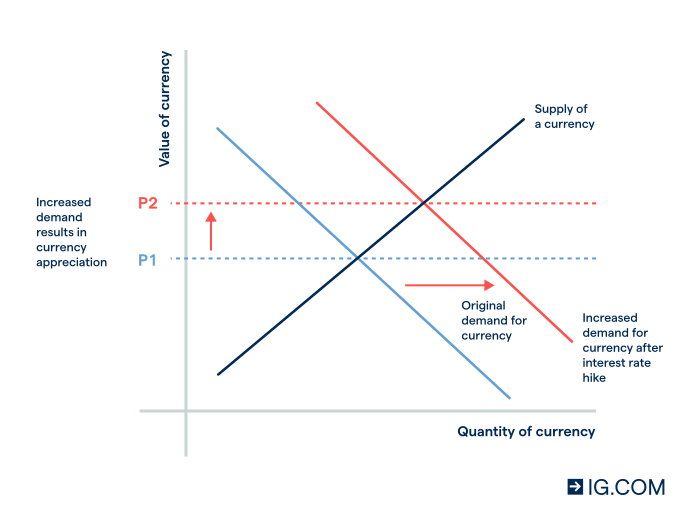
Currencies are financial assets. Just like bonds or stocks, they offer a return—and that return is heavily influenced by interest rates.
Higher interest rates generally mean:
-
Better yield on deposits and bonds
-
Increased foreign investment
-
Stronger demand for the currency
Lower interest rates often result in:
-
Capital outflows
-
Reduced returns
-
Weaker currency value
This relationship forms the basis of capital flow theory in forex.
The Link Between Interest Rates and Capital Flows
Global investors are constantly searching for yield.
When a country offers higher interest rates than others:
-
Foreign investors convert money into that currency
-
Demand for the currency increases
-
Exchange rate rises
Conversely, when rates fall:
-
Investors move capital elsewhere
-
Currency demand drops
-
Exchange rate weakens
This is why interest rate expectations, not just current rates, move the forex market.
Interest Rate Expectations vs Actual Rates
One of the most critical concepts in forex fundamental analysis is this:
Currencies move based on where interest rates are expected to go—not where they are now.
Example Scenario:
-
Current interest rate: 3.00%
-
Market expects a hike to 3.50%
→ Currency strengthens before the hike
When the hike finally occurs:
-
If expectations are met → Limited reaction
-
If expectations are exceeded → Strong rally
-
If expectations disappoint → Sharp sell-off
This forward-looking behavior explains why currencies often move ahead of central bank announcements.
Interest Rate Differentials Explained
Forex trading always involves pairs, not single currencies. This makes interest rate differentials extremely important.
What Is an Interest Rate Differential?
It is the difference between the interest rates of two currencies in a pair.
Example:
-
USD interest rate: 5.00%
-
JPY interest rate: 0.10%
-
Differential: 4.90%
This differential affects:
-
Capital flows
-
Swap rates
-
Long-term trend direction
Pairs with widening differentials often trend strongly.
Carry Trades: Interest Rates in Action
The carry trade is a classic forex strategy built entirely around interest rate differentials.
How Carry Trades Work
Traders:
-
Borrow a low-interest-rate currency
-
Buy a high-interest-rate currency
-
Earn the interest rate difference daily
Historically popular carry trade pairs include:
-
AUD/JPY
-
NZD/JPY
-
USD/JPY (during low JPY rate periods)
Why Carry Trades Can Be Profitable—and Risky
Carry trades perform well when:
-
Markets are stable
-
Risk sentiment is positive
-
Interest rate spreads are widening
They struggle when:
-
Risk-off sentiment dominates
-
Volatility spikes
-
Central banks shift policy
This is why carry trades often unwind violently during financial crises.
Real Interest Rates and Currency Strength
Nominal interest rates alone do not tell the full story.
What Are Real Interest Rates?
Real interest rates =
Nominal interest rate − Inflation rate
A country with:
-
6% interest rate
-
5% inflation
Has a real rate of only 1%.
Currencies tend to strengthen when:
-
Real interest rates are rising
-
Inflation is controlled
-
Central banks are perceived as credible
This is why inflation data is so closely linked to forex markets.
Yield Curves and Forex Market Expectations
Advanced fundamental traders also watch yield curves, especially in major economies.
What Yield Curves Signal
-
Rising yields → Growth optimism
-
Inverted yield curves → Recession risk
Changes in yield curves often:
-
Precede currency trend shifts
-
Influence long-term capital flows
-
Shape central bank expectations
Forex markets respond quickly to these signals.
Interest Rates vs Other Economic Indicators
While GDP, employment, and inflation are important, they all feed into one key question:
What will the central bank do next?
Interest rates act as the final transmission mechanism between economic data and currency valuation.
This is why traders often say:
“Trade the central bank, not the data.”
How Traders Position Around Interest Rate Decisions
Professional forex traders rarely gamble on announcements blindly.
Common approaches include:
-
Trading expectations weeks in advance
-
Scaling into positions before decisions
-
Waiting for post-decision confirmation
-
Using options to manage risk
Risk management is critical during rate decisions due to extreme volatility.


Central Banks and Forex Markets: Who Really Controls Currency Direction?
If economic data provides the signals and interest rates provide the mechanism, then central banks provide the power.
In fundamental analysis in forex, central banks are the single most influential institutions shaping long-term currency trends. Their decisions dictate interest rates, liquidity, inflation control, and investor confidence.
In many cases, currencies move more on what central banks say than on what they actually do.
What Is a Central Bank?
A central bank is a country’s primary monetary authority, responsible for maintaining economic and financial stability.
Its core objectives typically include:
-
Price stability (controlling inflation)
-
Economic growth support
-
Financial system stability
-
Currency credibility
Because currencies are backed by national economies, central banks sit at the heart of forex valuation.
How Central Banks Influence Forex Markets
Central banks affect currency prices through monetary policy, which directly impacts money supply and interest rates.
Their influence works through several channels:
-
Interest rate decisions
-
Market expectations
-
Liquidity injections or withdrawals
-
Policy communication and guidance
Even subtle wording changes can move billions in capital.
Monetary Policy Explained in Simple Terms
Monetary policy refers to how central banks manage money and credit conditions.
The Two Main Types of Monetary Policy
1. Hawkish Monetary Policy
Hawkish policy aims to fight inflation.
Characteristics include:
-
Raising interest rates
-
Reducing liquidity
-
Tightening financial conditions
Currencies tend to strengthen under hawkish policy.
2. Dovish Monetary Policy
Dovish policy aims to stimulate growth.
Characteristics include:
-
Cutting interest rates
-
Increasing liquidity
-
Supporting borrowing and spending
Currencies often weaken under dovish policy.
Central Bank Tools That Move Forex Markets
Central banks have several tools at their disposal, each with different market impacts.
1. Interest Rate Decisions
The most direct and powerful tool.
Even a 0.25% change can:
-
Trigger massive forex volatility
-
Shift long-term currency trends
2. Open Market Operations
Central banks buy or sell government securities to:
-
Inject liquidity
-
Drain excess money
This affects yields, bond markets, and currency flows.
3. Quantitative Easing (QE)
QE involves large-scale asset purchases.
Effects on forex:
-
Expands money supply
-
Lowers long-term yields
-
Weakens currency over time
QE is often used during economic crises.
4. Quantitative Tightening (QT)
QT is the opposite of QE.
Effects include:
-
Reduced liquidity
-
Rising yields
-
Strengthening currency
Markets closely track QT pace and duration.
5. Forward Guidance
Forward guidance refers to verbal communication about future policy.
This includes:
-
Policy statements
-
Press conferences
-
Economic projections
Forex markets often move more on guidance than on the actual decision.
Why Central Bank Communication Matters More Than Actions
In modern forex markets, expectation management is everything.
Central banks aim to:
-
Avoid shocking markets
-
Gradually guide expectations
-
Maintain credibility
A single phrase such as:
“We are prepared to act if necessary”
Can cause:
-
Yield shifts
-
Currency rallies or sell-offs
-
Volatility spikes
Professional traders dissect every word.
The World’s Most Influential Central Banks in Forex
Not all central banks carry equal weight. Some dominate global capital flows.
Federal Reserve (United States)
The Federal Reserve is the most powerful central bank in the world.
Why it matters:
-
USD is the global reserve currency
-
US interest rates affect global liquidity
-
Fed policy impacts emerging and developed markets alike
Hawkish Fed → Strong USD
Dovish Fed → Weak USD
European Central Bank (Eurozone)
The ECB controls monetary policy for 20 eurozone countries.
Key challenges:
-
Diverse economies
-
Inflation disparities
-
Political fragmentation
ECB policy strongly influences:
-
EUR/USD
-
EUR/GBP
-
EUR/JPY
Bank of Japan (Japan)
The BOJ is known for ultra-loose monetary policy.
Key features:
-
Near-zero interest rates
-
Yield Curve Control (YCC)
-
Heavy market intervention
JPY often weakens during:
-
Risk-on environments
-
Widening rate differentials
Bank of England (United Kingdom)
The BOE balances:
-
Inflation control
-
Economic growth
-
Political uncertainty
GBP is highly sensitive to:
-
Rate expectations
-
Inflation surprises
-
Policy credibility
Swiss National Bank
The SNB actively manages CHF strength.
Known for:
-
Currency interventions
-
Safe-haven policy
-
Aggressive inflation control
CHF often strengthens during global uncertainty.
Central Bank Divergence and Forex Trends
One of the most powerful fundamental themes in forex is policy divergence.
What Is Central Bank Divergence?
It occurs when:
-
One central bank tightens policy
-
Another eases or stays neutral
This creates:
-
Widening interest rate differentials
-
Strong directional currency trends
Example:
-
Fed tightening + BOJ easing
→ USD/JPY uptrend
Central Banks and Risk Sentiment
Central banks also shape global risk appetite.
-
Easy policy → Risk-on environment
-
Tight policy → Risk-off environment
Risk-on favors:
-
High-yield currencies
-
Carry trades
Risk-off favors:
-
USD
-
JPY
-
CHF
Understanding this dynamic is crucial for positioning.


How to Combine Fundamental and Technical Analysis in Forex
One of the most common misconceptions among traders is that they must choose between fundamental analysis and technical analysis. In reality, the most consistent traders combine both.
Why a Hybrid Approach Works Best
Fundamental analysis answers:
-
Why the market should move
Technical analysis answers:
-
When to enter and exit
When aligned, these two approaches significantly improve probability.
Practical Example of a Combined Strategy
-
Fundamental Bias
-
Inflation rising faster than expected
-
Central bank signaling tighter policy
-
Bullish bias on the currency
-
-
Technical Confirmation
-
Price breaks above key resistance
-
Higher highs and higher lows form
-
Momentum indicator confirms trend
-
-
Execution
-
Enter on pullback or breakout
-
Stop-loss below structure
-
Target aligned with trend strength
-
This approach avoids emotional trades and random entries.
News Trading vs Long-Term Fundamental Positioning
Fundamental analysis can be applied in different ways depending on your trading style.
Short-Term News Trading
News trading focuses on volatility around economic releases.
Characteristics:
-
Fast execution
-
High volatility
-
Short holding periods
Best Practices:
-
Trade only high-impact events
-
Reduce position size
-
Wait for direction confirmation
-
Avoid widening spreads
News trading is advanced and not suitable for beginners without risk controls.
Medium- to Long-Term Fundamental Trading
This approach focuses on macroeconomic trends.
Characteristics:
-
Lower frequency
-
Wider stops
-
Strong directional bias
Ideal For:
-
Swing traders
-
Position traders
-
Traders combining fundamentals with weekly/daily charts
This method is often more stable and less stressful.
Risk Sentiment and Its Role in Fundamental Analysis
Beyond economic data and central banks, risk sentiment plays a critical role in forex markets.
Risk-On vs Risk-Off Explained
Risk-On Environment
-
Strong global growth
-
Stable markets
-
Rising equities
Currencies that tend to benefit:
-
High-yield currencies
-
Commodity-linked currencies
Risk-Off Environment
-
Economic uncertainty
-
Market stress
-
Geopolitical tension
Currencies that tend to strengthen:
-
Safe-haven currencies
-
Reserve currencies
Understanding risk sentiment helps traders avoid trading against the broader market mood.
Common Mistakes in Forex Fundamental Analysis
Even experienced traders make mistakes when applying fundamentals.
Mistakes to Avoid
-
Trading headlines instead of expectations
-
Ignoring central bank communication
-
Overreacting to single data points
-
Failing to align timeframes
-
Neglecting risk management
Fundamental analysis rewards patience, context, and discipline.
How to Build a Forex Fundamental Trading Plan
A structured plan improves consistency and confidence.
Key Components of a Fundamental Trading Plan
-
Core currency bias
-
Key economic indicators to track
-
Central bank policy outlook
-
Risk sentiment assessment
-
Technical entry criteria
-
Risk and position sizing rules
Without a plan, even the best analysis fails.
Frequently Asked Questions (FAQ)
1. What is fundamental analysis in forex trading?
Fundamental analysis in forex evaluates currencies based on economic data, interest rates, central bank policy, and macroeconomic conditions.
2. How does economic news affect forex prices?
Economic news influences expectations about growth, inflation, and interest rates, which directly impact currency demand and supply.
3. Why are interest rates so important in forex?
Interest rates determine capital flows. Higher rates attract investment and strengthen currencies, while lower rates often weaken them.
4. Do central banks really control currency markets?
Central banks strongly influence currency trends through monetary policy decisions, liquidity control, and forward guidance.
5. Is fundamental analysis better than technical analysis?
Neither is better alone. Fundamental analysis provides direction, while technical analysis improves timing and execution.
6. Can beginners use fundamental analysis in forex?
Yes. Beginners should start by tracking major economic indicators and understanding central bank policy trends.
7. How often should I review fundamental data?
Major economic data should be reviewed weekly, while central bank policy outlooks should be monitored continuously.
Conclusion: Mastering Fundamental Analysis in Forex Trading
Fundamental analysis in forex is about understanding why currencies move, not guessing where price will go next.
By mastering:
-
Economic news interpretation
-
Interest rate dynamics
-
Central bank behavior
-
Risk sentiment
You gain a powerful framework for identifying high-probability trading opportunities.
When combined with disciplined execution and sound risk management, fundamental analysis transforms forex trading from speculation into strategic decision-making.
If you want to trade with confidence and clarity, mastering forex fundamentals is not optional—it’s essential.
